
Browse by Theme: Gender Equality
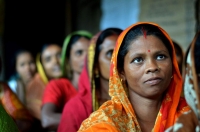
This week the UK government takes the historic step of becoming one of the first institutions to make an official statement on how companies should operationalize the UN Guiding Principles on Business and Human Rights, more commonly known as the Ruggie Principles. Leading the process to formalize the ambitious but sometimes vague standards laid out in the Principles deserves to be applauded. However, because it is the first such initiative, and one that both governments and business will look to in order to judge the long-term viability of much of the business and human rights agenda, there is heavy pressure to get it right.
Read more...
Debate on the possibilities at the base of the pyramid (BOP) is ubiquitous; nonetheless, too often regulated to a post-script is that frequently when we refer to the BOP what we actually mean is women at the BOP. It’s time to stop discussing the BOP as a single, homogenous entity and start looking more specifically at what it will mean to engage with women as producers and as consumers.
Apart from some notable exceptions, the most oft-cited evidence for the business case for gender equality tends to focus disproportionately on large, western companies in the formal sector. Far less visible are examples that demonstrate why companies should-or how they can- act on Women’s Empowerment Principle 5: “implement enterprise development, supply chain and marketing practices that empower women.”
Read more...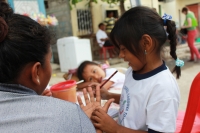
There are certain working conditions that most workers take for granted; established working hours, a minimum wage, paid annual leave, social security and maternity leave. Historically, domestic workers haven’t shared these basic rights but a major new piece of legislation could change this unacceptable breach of human rights. On the 16th June 2011, at the International Labour Organisation's 100th international conference, 183 countries signed Convention 189. This landmark legislation mandates state-supported protection to ensure decent work for domestic workers. However, to date, only eight countries have ratified the convention (Uruguay, the Philippines, Mauritius, Bolivia, Nicaragua, Italy, Paraguay, and South Africa). At CARE International, we believe domestic work is “real” work and it is time for domestic workers to be granted the same working conditions that other workers all over the world are granted without question.
Read more...
Debate on the possibilities at the base of the pyramid (BOP) is ubiquitous; nonetheless, too often regulated to a post-script is that frequently when we refer to the BOP what we actually mean is women at the BOP. It’s time to stop discussing the BOP as a single, homogenous entity and start looking more specifically at what it will mean to engage with women as producers and as consumers.
Apart from some notable exceptions, the most oft-cited evidence for the business case for gender equality tends to focus disproportionately on large, western companies in the formal sector. Far less visible are examples that demonstrate why companies should-or how they can- act on Women’s Empowerment Principle 5: “implement enterprise development, supply chain and marketing practices that empower women.”
Read more...