
Browse by Theme: Women's Voice
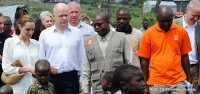
As world leaders gathered yesterday in New York for the high-powered UN General Assembly, the governments of Canada, Croatia, Denmark, France, Indonesia, Italy, Japan, Republic of Korea, Senegal, United Arab Emirates, United Kingdom, the United States and over 100 other countries launched a new ‘Declaration of commitment to end sexual violence in conflict’. Why now and what does it mean?
Read more...
The UK government has just published its ‘Action Plan on Business and Human Rights’. This is the keenly awaited guidance for UK business on how they should respond to the UN Guiding Principles on Business and Human Rights. However, this is a very sketchy Action Plan: for instance it does not discuss Gender, a key issue, in any detail. But more importantly from my point of view is that it gives no indication of any intention to give legal effect to the Guiding Principles requirements on companies: without this it is hard to see how the plan will make a meaningful difference.
Read more...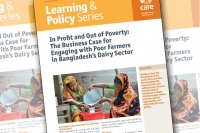
Debate on the possibilities at the base of the pyramid (BOP) is ubiquitous; nonetheless, too often regulated to a post-script is that frequently when we refer to the BOP what we actually mean is women at the BOP. It’s time to stop discussing the BOP as a single, homogenous entity and start looking more specifically at what it will mean to engage with women as producers and as consumers.
Apart from some notable exceptions, the most oft-cited evidence for the business case for gender equality tends to focus disproportionately on large, western companies in the formal sector. Far less visible are examples that demonstrate why companies should-or how they can- act on Women’s Empowerment Principle 5: “implement enterprise development, supply chain and marketing practices that empower women.”
Read more...
A recent WHO study re-confirmed that Pakistan has one of the highest maternal mortality rates in the world (nearly 300 women die for every 100,000 births) and many of them are under 20 years old. Despite the challenging political, economic and social context, sixteen parliamentarians from the main four provinces in Pakistan have recently promised to include sexual and reproductive health needs in their provincial health plans.
Read more...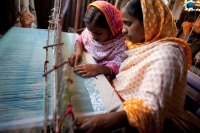
Human rights remains a topic that companies may reference perfunctorily in their codes of conduct, but few really seem to understand. In their defence, this is in part because, first, best practice standards on business and human rights are often nascent at best, and, second, human rights tend to be expressed in a nearly impenetrable mass of legalistic jargon.
In the interest of bridging some of the gaps between business, development and human rights terminologies, I’ve identified the three most common misconceptions about human rights and business.
Read more...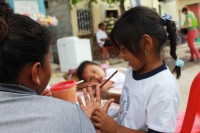
There are certain working conditions that most workers take for granted; established working hours, a minimum wage, paid annual leave, social security and maternity leave. Historically, domestic workers haven’t shared these basic rights but a major new piece of legislation could change this unacceptable breach of human rights. On the 16th June 2011, at the International Labour Organisation's 100th international conference, 183 countries signed Convention 189. This landmark legislation mandates state-supported protection to ensure decent work for domestic workers. However, to date, only eight countries have ratified the convention (Uruguay, the Philippines, Mauritius, Bolivia, Nicaragua, Italy, Paraguay, and South Africa). At CARE International, we believe domestic work is “real” work and it is time for domestic workers to be granted the same working conditions that other workers all over the world are granted without question.
Read more...
In the last few months the world’s leaders have declared and resolved to end sexual violence against women in conflict. First we had the G8 declaration and then UN resolution 2106 but what difference will these really make to the women who are being raped in places like the DRC, Syria and South Sudan?
Read more...