
Browse by Theme: Women's Voice

A recent WHO study re-confirmed that Pakistan has one of the highest maternal mortality rates in the world (nearly 300 women die for every 100,000 births) and many of them are under 20 years old. Despite the challenging political, economic and social context, sixteen parliamentarians from the main four provinces in Pakistan have recently promised to include sexual and reproductive health needs in their provincial health plans.
Read more...
Debate on the possibilities at the base of the pyramid (BOP) is ubiquitous; nonetheless, too often regulated to a post-script is that frequently when we refer to the BOP what we actually mean is women at the BOP. It’s time to stop discussing the BOP as a single, homogenous entity and start looking more specifically at what it will mean to engage with women as producers and as consumers.
Apart from some notable exceptions, the most oft-cited evidence for the business case for gender equality tends to focus disproportionately on large, western companies in the formal sector. Far less visible are examples that demonstrate why companies should-or how they can- act on Women’s Empowerment Principle 5: “implement enterprise development, supply chain and marketing practices that empower women.”
Read more...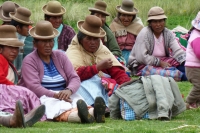
Along with a delegation from CARE International UK, I recently visited colleagues at CARE Peru (or Cah-Rey Peru as its pronounced in Spanish!) to witness how they are reaping real results in tackling the challenges of poverty and inequality in a ‘Middle Income Country’ (MIC).
A MIC is defined by the World Bank as any country with a Gross National Income per capita above $1000. The EU, UK and other donors are busy cutting aid to these countries, arguing that in times of austerity development aid should be only be spent in Low Income Countries.
Read more...
Value Chains, Business Plans and International Markets. What do these terms mean for some of the poorest people living in the isolated farming region of Sopachuy in Bolivia?
Quite a lot, it turns out: “Access to bigger markets means increased income and stable employment which will help to pull hundreds of farming families out of poverty in this region” explains Isabel, CARE Bolivia’s Monitoring and Evaluation Advisor on the drive through the beautiful undulating hills of the Chuquisaca region, home to some of these very poor people.
Read more...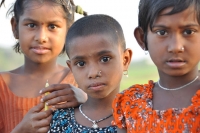
As Usain Bolt pounded to the 200m finish line, displaying formidable human strength, my mind wandered to the Olympics and Paralympics aftermath. The Olympics this year closed to a new opening – one that is hoped to herald in new commitments to reducing malnutrition rates across the developing world.
Looking at Bolt’s muscles flexing across the screen, it seemed apt that the UK’s Hunger Summit on Sunday, which hopes to capitalise on the energy of the Olympics, was promoted by some of the UK’s leading athletes. Sportsmen such as David Beckham and Mo Farah must understand more than most the importance of nutrition.
Read more...
As the world gathers at the Global Summit to End Sexual Violence in Conflict, a four-year CARE project addressing gender-based violence in East Africa has shown just what kind of real policy changes can be achieved using joined up advocacy and strong evidence.
Read more...